Government Establishes Whole-of-Government Response System Including 'IPEF' One-Team Negotiation Group
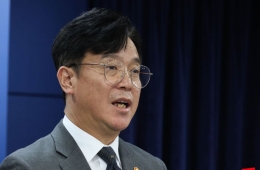
[Asia Economy Reporter Yoo In-ho] The government has decided to form a negotiation team as a 'one team' comprising the Ministry of Foreign Affairs, Ministry of Economy and Finance, Ministry of Trade, Industry and Energy, and other related ministries to respond to the Indo-Pacific Economic Framework (IPEF) participation.
The Ministry of Foreign Affairs announced on the 7th that at the Foreign Economic Ministers' Meeting held that day, they discussed the progress and response measures of the IPEF, which officially launched on the 23rd of last month, and established an inter-ministerial government response system for cooperation among related ministries.
Unlike traditional trade agreements focused on tariff reductions and market opening, IPEF is a new form of economic cooperation platform established to jointly respond to supply chain disruptions, digital transformation, climate change, and other issues highlighted after the pandemic.
![[Image source=Yonhap News]](http://www.asiae.co.kr/news/img_view.htm?img=2022052810214084222_1653700900.jpg)
At the Korea-US summit on the 21st of last month, President Yoon Suk-yeol officially declared participation in the IPEF.
Accordingly, ministerial-level foreign consultations will be overseen by the Director-General for Trade Negotiations of the Ministry of Trade, Industry and Energy, and high-level consultations will be led by the Director of Trade Negotiations of the same ministry as the chief representative for comprehensive response.
For the four major areas of trade, supply chains, clean energy/decarbonization/infrastructure, and taxation/anti-corruption, the Ministry of Foreign Affairs, Ministry of Economy and Finance, and Ministry of Trade, Industry and Energy will lead discussions either independently or jointly, considering the content and nature of the IPEF agenda.
The Ministry of Trade, Industry and Energy will handle trade; the Ministry of Foreign Affairs, Ministry of Economy and Finance, and Ministry of Trade, Industry and Energy will handle supply chains; the Ministry of Foreign Affairs and Ministry of Trade, Industry and Energy will handle clean energy, decarbonization, and infrastructure; and the Ministry of Economy and Finance and Ministry of Trade, Industry and Energy will handle taxation and anti-corruption.
Additionally, related ministries such as the Ministry of Justice, Ministry of Government Legislation, Ministry of Science and ICT, Ministry of Land, Infrastructure and Transport, Ministry of Environment, Ministry of Agriculture, Food and Rural Affairs, and Ministry of Employment and Labor will jointly respond to IPEF discussions based on their respective expertise.
Furthermore, alongside the government response system, to maintain close and organic communication and cooperation with the economic sector, a public-private strategic meeting (chaired by the Director-General for Trade Negotiations) and public-private consultative bodies for the four major areas will be operated.
The public-private strategic meeting will be composed mainly of major economic organizations, industry-specific associations, and specialized institutions, and is scheduled to launch within this month.
Hot Picks Today
 "Stocks Are Not Taxed, but Annual Crypto Gains Over 2.5 Million Won to Be Taxed Next Year... Investors Push Back"
- "Don't Throw Away Coffee Grounds" Transformed into 'High-Grade Fuel' in Just 90 Seconds [Reading Science]
- [Lee Jaemyung Administration One Year] "A Breakwater in Crisis, a Blade Against Waste"... Planning Ministry's Fiscal Tightening Earns High Marks
- "Groups of 5 or More Now Restricted"... Unrelenting Running Craze Leaves Citizens and Police Exhausted
- "Even With a 90 Million Won Salary and Bonuses, It Doesn’t Feel Like Much"... A Latecomer Rookie Who Beat 70 to 1 Odds [Scientists Are Disappearing] ③
A Ministry of Foreign Affairs official stated, “We aim to share the progress of IPEF discussions with the economic sector, identify agendas reflecting our interests, and prepare response measures that can materialize the benefits of participating in the IPEF. Through the domestic response system, the government will actively participate in future discussions and lead issues such as supply chains, digital, and clean energy so that our citizens and companies can feel the tangible benefits of IPEF participation.”
© The Asia Business Daily(www.asiae.co.kr). All rights reserved.