Discussion on Next Week's FOMC... Forex Market on Alert
US Consumer Price Increase and Early Tapering
Pressure on Exchange Rate Rise Upward

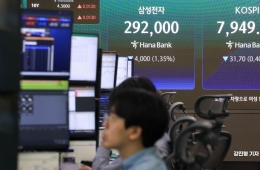
[Asia Economy Reporter Jang Sehee] The won-dollar exchange rate, which had been showing a slightly weak trend around the 1170-1180 won range recently, is expected to rise again next week following the US Federal Open Market Committee (FOMC) meeting. This is due to the anticipation that messages regarding inflation and the Federal Reserve's early tapering (reduction of asset purchases) ahead of the November US consumer price index announcement will impact the exchange rate.
As of 10 a.m. on the 10th in the Seoul foreign exchange market, the won-dollar exchange rate rose 2.8 won to 1177.3 won. The exchange rate started the day up 3.9 won from the previous day and has been fluctuating in the high 1170 won range in the early trading session.
Recently, the won-dollar exchange rate has maintained a somewhat stable trend. Although there were concerns that the spread of the COVID-19 variant virus would unsettle the market, these worries did not materialize. On the contrary, funds from emerging markets, which were hit by the tourism industry, flowed into the domestic market, contributing to exchange rate stability. In particular, in the domestic stock market, foreign investors' buying trend has been prominent since last month, limiting upward pressure on the exchange rate. On the 9th alone, foreign investors net purchased stocks worth 365 billion won in the Korea Composite Stock Price Index (KOSPI) and KOSDAQ markets. This marked the third consecutive day of net buying since the 7th.
Oh Changseop, a researcher at Hyundai Motor Securities, stated, "Although there are various factors, foreign investors' net buying of domestic stocks for four consecutive weeks also acted as a supply-demand factor preventing the exchange rate from rising."
However, experts believe that the exchange rate may face upward pressure depending on the outcome of next week's FOMC meeting. The exchange rate could be affected by the pace of tapering. In particular, attention is focused on the possibility of breaking through the 1200 won level. When the exchange rate exceeded 1200 won last October, the government verbally intervened to curb the rapid rise in the won-dollar exchange rate. Since then, 1200 won has become a strong resistance level.
Researcher Oh said, "If statements about interest rate hikes become visible at the FOMC meeting, the direction of the dollar itself is likely to establish a strong bullish trend," adding, "Whether foreign investors continue their net buying of domestic stocks and the stance of US monetary tightening will be the most important variables for breaking through 1200 won."
Hot Picks Today
 Up to 600 Million Won for Semiconductors, 160 Million Won Bonus for Loss-Making Non-Memory… Samsung Electronics Labor and Management Reach Tentative Deal on Unprecedented Performance Compensation (Comprehensive)
- "Could I Also Receive 370 Billion Won?"... No Limit on 'Stock Manipulation Whistleblower Rewards' Starting the 26th
- "From a 70 Million Won Loss to a 350 Million Won Profit with Samsung and SK hynix"... 'Stock Jackpot' Grandfather Gains Attention
- [Current State of K-Finance for Foreign Nationals]①From Niche to Core... Banks Go All-In on First-Mover Competition
- "Who Is Visiting Japan These Days?" The Once-Crowded Tourist Spots Empty Out... What's Happening?
Yoon Yeosam, a researcher at Meritz Securities, said, "If the dot plot signals three interest rate hikes next year, it will also affect the direction of the exchange rate." However, he added, "It is also necessary to consider that the fundamentals of the Korean economy, such as exports and the current account balance, are both favorable."
© The Asia Business Daily(www.asiae.co.kr). All rights reserved.