Constitutional Court's Prolonged Delays in Hearings Ignoring Citizens' Fundamental Rights Constitute Judicial Neglect
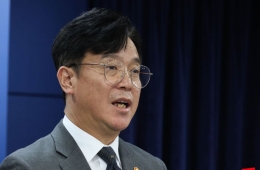
Assemblyman So Byeong-cheol Emphasizes "Urging the Formation of the Long-Unsolved Case Resolution Committee and Promoting the Enactment of the Trial Compensation Delay Act"

[Suncheon=Asia Economy Honam Reporting Headquarters Reporter Lee Hyung-kwon] According to data received from the Constitutional Court, Democratic Party lawmaker So Byung-chul (Suncheon-Gwangyang-Gokseong-Gurye Gap, Judiciary Committee) announced on the 12th that as of August 31, the number of unresolved cases exceeding 180 days at the Constitutional Court reached 1,303.
Unresolved cases by duration of review are as follows: 336 cases have exceeded 180 days but are within 1 year, 393 cases have exceeded 1 year but are within 2 years, 260 cases have exceeded 2 years but are within 5 years, and 14 cases are ultra-long unresolved cases exceeding 5 years.
Among them, the longest unresolved case has a review period of 3,483 days.
According to Article 38 of the Constitutional Court Act, the Constitutional Court must deliver a final decision within 180 days from the date the case is received.
Regarding the delay in the Constitutional Court’s handling, Representative So strongly criticized the court, saying, “If the Constitutional Court’s decision had been faster, the late emergency measure victim Oh Jong-sang (hereinafter the deceased) would have been able to clear his grievances before passing away. The delayed review and long-term unresolved cases at the Constitutional Court are judicial neglect that disregards the basic rights of the people.”
The deceased, a victim of Emergency Measure No. 1, was acquitted in January 2010 after a retrial decision and subsequently filed a lawsuit against the state seeking compensation for mental damages caused by illegal acts.
However, in May 2016, the Supreme Court dismissed his lawsuit, ruling that since the deceased was receiving living support payments under the Act on the Restoration of Honor and Compensation for Democratic Movement Participants (hereinafter the Democratic Compensation Act), the effect of judicial settlement applied.
Subsequently, on June 10, he filed a constitutional complaint regarding Article 18, Paragraph 12 of the Democratic Compensation Act with the Constitutional Court, but the unconstitutional ruling was only made on August 30, 2018, more than two years and two months later.
The deceased filed another lawsuit with the court and was recognized for the state’s liability for compensation only on September 30, three years later.
However, he passed away on October 4, just four days after the ruling.
Representative So lamented, “The first constitutional complaint regarding Article 18, Paragraph 2 of the Democratic Compensation Act was filed on April 16, 2014. If the Constitutional Court had complied with the legally mandated 180-day processing period or made a quicker decision on the case, the deceased would have been able to resolve his grievances before passing.”
He continued, “The late Jeong Won-seop, the protagonist of the movie Miracle in Cell No. 7, also passed away in March of this year while his constitutional complaint against the government was under review. The Constitutional Court had been postponing judgment on the constitutional complaint filed in December 2016 and dismissed it on September 30, six months after his death, citing his passing as the reason. The Constitutional Court is infringing on basic rights,” strongly criticizing the court.
Representative So pointed out the Constitutional Court’s passive attitude, saying, “The Constitutional Court is watching the political climate and waiting for the Supreme Court’s acquittal or legislative amendments before making decisions.”
He added, “Nowhere in the inauguration speeches of the nine Constitutional Court justices is there a declaration or expression of determination to realize the constitutional right to a speedy trial,” raising doubts about whether the Constitutional Court is turning a blind eye to speedy trials, as indicated in decision 98HunMa75, which ruled that specific legislation is necessary to realize the constitutional right to a speedy trial.
Representative So emphasized, “Justice delayed is justice denied. The Constitutional Court must do its utmost to process cases promptly to guarantee the basic rights of the people,” and stressed, “It is necessary to resolve already delayed long-term unresolved cases and to prepare more fundamental measures to prevent the occurrence of long-term unresolved cases in the future.”
Hot Picks Today
 "Stocks Are Not Taxed, but Annual Crypto Gains Over 2.5 Million Won to Be Taxed Next Year... Investors Push Back"
- "Don't Throw Away Coffee Grounds" Transformed into 'High-Grade Fuel' in Just 90 Seconds [Reading Science]
- Signed Without Viewing for 1.6 Billion Won... Jamsil and Seongbuk Jeonse Prices Jump 200 Million Won in a Month [Real Estate AtoZ]
- "Groups of 5 or More Now Restricted"... Unrelenting Running Craze Leaves Citizens and Police Exhausted
- "Even With a 90 Million Won Salary and Bonuses, It Doesn’t Feel Like Much"... A Latecomer Rookie Who Beat 70 to 1 Odds [Scientists Are Disappearing] ③
As fundamental measures to improve trial delays, Representative So proposed, “First, the Constitutional Court itself should declare that neglecting long-term unresolved cases is unconstitutional, as the German Constitutional Court does; second, for ultra-long unresolved cases exceeding 30 months, establish an Ultra-Long Unresolved Case Resolution Committee to promptly deliver rulings; third, mandate the National Assembly to submit detailed annual reports including reasons and resolution plans for ultra-long unresolved cases; and fourth, consider enacting a Trial Delay Compensation Act introduced in Germany.”
© The Asia Business Daily(www.asiae.co.kr). All rights reserved.