Five Listed Companies with Over 500 Billion KRW Showing 'Non-Static' Internal Accounting
[Asia Economy Reporter Ji Yeon-jin] Among approximately 400 listed corporations with assets exceeding 500 billion KRW last year, it was found that 5 companies received adverse audit opinions.

The Financial Supervisory Service (FSS) announced on the 23rd that, based on an analysis of internal accounting control system audit opinions for the 2020 fiscal year, among 413 listed companies with assets over 500 billion KRW, 5 companies received adverse opinions, resulting in an adverse opinion rate of 1.2%. This rate decreased by 1.3% compared to the 2.5% adverse opinion rate found in 2019 when analyzing 160 listed companies with assets over 2 trillion KRW.
The internal accounting control system (hereafter referred to as internal accounting) is a system designed and operated to prepare and disclose financial statements, which is subject to audit. Previously, only audit opinions on financial statements were provided, but since 2019, audits on internal accounting have been gradually expanded according to the asset size of listed companies. In 2019, audits on internal accounting were conducted for listed companies with assets over 2 trillion KRW; last year for those over 500 billion KRW; in 2022 for those over 100 billion KRW; and in 2023, the scope will expand to all listed companies.
The FSS evaluated that although the number of audit targets increased this time, the decrease in the adverse opinion rate is due to the fact that most medium to large listed companies with assets over 500 billion KRW have relatively abundant human and material infrastructure, such as consulting accounting firms and improving internal accounting systems in preparation for internal accounting audits, and that companies had sufficient time to prepare as the audit targets were expanded step-by-step.
However, only one listed company disclosed weaknesses in the internal accounting evaluation results by the audit committee, suggesting a passive stance toward evaluating significant weaknesses. Additionally, among the 5 companies that received adverse opinions on internal accounting audits, 2 also received adverse opinions on financial statement audits.
Hot Picks Today
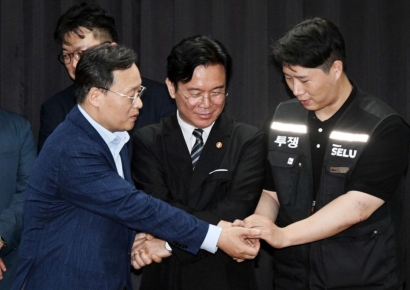 Dramatic Agreement Reached on Eve of Samsung Electronics General Strike... Minister Kim Young-hoon: "Showcased Korea's Strength in Dialogue" (Update)
- "It Has Now Crossed Borders": No Vaccine or Treatment as Bundibugyo Ebola Variant Spreads [Reading Science]
- "Need to Discuss Excluding Controlling Shareholders' Voting Rights in Dual Listings"
- "Stocks Are Not Taxed, but Annual Crypto Gains Over 2.5 Million Won to Be Taxed Next Year... Investors Push Back"
- "Who Is Visiting Japan These Days?" The Once-Crowded Tourist Spots Empty Out... What's Happening?
An FSS official stated, "The audit committee needs to independently conduct internal accounting evaluations, communicate sufficiently with external auditors, and then form evaluation opinions," adding, "Information users should carefully review not only the significant weaknesses disclosed by external auditors but also the causes, improvement plans, and implementation results of significant weaknesses disclosed by the companies themselves."
© The Asia Business Daily(www.asiae.co.kr). All rights reserved.