[Bank of Korea Price Check] Lee Ju-yeol Officially Signals Interest Rate Hike Within the Year
General Public Inflation Expectations at 2.3%... Highest in 27 Months
![[Image source=Yonhap News]](http://www.asiae.co.kr/news/img_view.htm?img=2021061213054776679_1623470748.jpg)
[Asia Economy Reporters Eunbyeol Kim and Sehee Jang] The one-year-ahead inflation expectation rate has reached its highest level in two years and three months. This indicates that the general public expects the price level to rise further. Lee Ju-yeol, Governor of the Bank of Korea, has effectively announced a policy to raise interest rates within the year. This decision was made as inflation has proven to be stronger than anticipated, leaving no reason to wait any longer.
At the ‘2021 First Half Inflation Target Management Status Review Briefing’ on the 24th, Governor Lee stated, "There are quite a few factors that could potentially cause inflation in the medium term," and assessed that "as our economy’s recovery becomes more evident, inflationary pressures from the demand side are gradually expanding."
According to the inflation target review report released by the Bank of Korea on the same day, the inflation rate forecast expected by the general public has already surpassed 2%, reaching 2.3%. This is the highest level since March 2019 (2.3%). Governor Lee noted, "If the high inflation rate persists for a considerable period, it could trigger additional inflation."
The possibility of an interest rate hike within the year has also increased. Governor Lee said, "We will orderly normalize the current accommodative monetary policy from an appropriate point within the year," adding, "Normalizing in line with the economic recovery is a natural process." He also stated, "We need to start normalization (of the base interest rate) at a timely point," and "Even if interest rates are raised once or twice, monetary policy will still be accommodative."
Governor Lee emphasized the complementary necessity of the government’s second supplementary budget proposal. He said, "Although the overall economic recovery speed is strong, the pace varies by sector, so monetary policy must address the side effects of prolonged low interest rates," and stressed, "Fiscal policy should focus support on vulnerable areas as a desirable policy combination."
Hot Picks Today
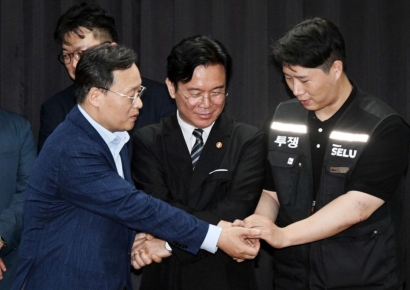 Dramatic Agreement Reached on Eve of Samsung Electronics General Strike... Minister Kim Young-hoon: "Showcased Korea's Strength in Dialogue" (Update)
- "It Has Now Crossed Borders": No Vaccine or Treatment as Bundibugyo Ebola Variant Spreads [Reading Science]
- "Need to Discuss Excluding Controlling Shareholders' Voting Rights in Dual Listings"
- "Stocks Are Not Taxed, but Annual Crypto Gains Over 2.5 Million Won to Be Taxed Next Year... Investors Push Back"
- "Who Is Visiting Japan These Days?" The Once-Crowded Tourist Spots Empty Out... What's Happening?
© The Asia Business Daily(www.asiae.co.kr). All rights reserved.