'Solar Power Complexes' to Be Established on 13 Railway Sites Nationwide... Seoul City, Ministry of Land, and Korea Railroad Corporation Sign Business Agreement
Establishment of a Large-Scale 25MW Solar Power Complex at History, Vehicle Depot, and Parking Lot by the End of Next Year

[Asia Economy Reporter Lim Cheol-young] On the 24th, the Seoul Metropolitan Government announced that it will establish a large-scale 25MW solar power generation complex by the end of next year at 13 railway sites nationwide, including railway stations, vehicle depots, and station parking lots, in collaboration with the Ministry of Land, Infrastructure and Transport and Korea Railroad Corporation.
Through the 'Collaborative Green New Deal,' the plan is to transform railway facilities into a 'low-carbon railroad' leading the sustainable energy era. This is the first attempt to massively introduce solar power generation facilities into the nation's core infrastructure, railway infrastructure, through a model where local governments cooperate with the central government and government-affiliated public enterprises.
In particular, the 13 railway sites include Seoul Station, the starting point and gateway of the era of peace between North and South Korea, Dorasan Station (the northernmost station on the Gyeongui Line) to the west, Jejin Station (the northernmost station on the Donghae Bukbu Line) to the east, and nearby Imun and Haengsin vehicle depots, among others.
The three stations with historical and geographical symbolism?Seoul Station, Dorasan Station, and Jejin Station?will become 'solar power landmarks' spreading the atmosphere of peace on the Korean Peninsula. Solar power sculptures symbolizing peace on the Korean Peninsula will be installed at Dorasan Station and Jejin Station. Large-scale solar power generation facilities will be installed on rooftops and shade structures at six railway vehicle depots and four station parking lots with abundant sunlight.
The Seoul Metropolitan Government expects that this solar power deployment will produce electricity annually sufficient for more than 10,000 households (32 million kWh per year) and achieve a carbon reduction effect equivalent to planting 2.2 million 30-year-old pine trees. It is also projected to generate nearly 100 billion KRW (98.8 billion KRW) in power generation revenue over 20 years of solar power operation.
The total project cost is 48.2 billion KRW. Notably, 30% (14.4 billion KRW) of this will be promoted as a 'National Fund' open to all citizens. By having the public, the main agents of energy innovation, directly invest, it is expected to increase public interest in solar power facilities, dispel vague negative perceptions, and share the generated power revenue with citizens, achieving a triple benefit.
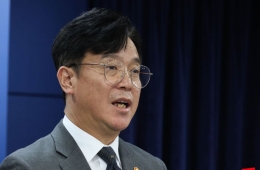
On the afternoon of the same day, Acting Mayor Seo Jeong-hyeop will sign a joint cooperation agreement on expanding solar power deployment in railway infrastructure with Son Myeong-su, Vice Minister of the Ministry of Land, Infrastructure and Transport, and Son Byeong-seok, President of Korea Railroad Corporation, at Seoul City Hall. According to the agreement, Seoul will be responsible for solar power design, installation, and operation. A special purpose corporation (SPC) will be established by the second half of this year to promote the project and secure the 48.2 billion KRW project cost.
Hot Picks Today
 "Stocks Are Not Taxed, but Annual Crypto Gains Over 2.5 Million Won to Be Taxed Next Year... Investors Push Back"
- "Don't Throw Away Coffee Grounds" Transformed into 'High-Grade Fuel' in Just 90 Seconds [Reading Science]
- Signed Without Viewing for 1.6 Billion Won... Jamsil and Seongbuk Jeonse Prices Jump 200 Million Won in a Month [Real Estate AtoZ]
- "Groups of 5 or More Now Restricted"... Unrelenting Running Craze Leaves Citizens and Police Exhausted
- "Even With a 90 Million Won Salary and Bonuses, It Doesn’t Feel Like Much"... A Latecomer Rookie Who Beat 70 to 1 Odds [Scientists Are Disappearing] ③
Acting Mayor Seo Jeong-hyeop said, "The fact that responding to climate change in the post-COVID-19 era is not a matter of choice but a responsibility for all of us has become a clear proposition of the times through COVID-19," and added, "We will do our best to make this a decisive step toward a 2050 carbon-neutral city, a clear city free from fine dust worries, and a sustainable resource-circulating city."
© The Asia Business Daily(www.asiae.co.kr). All rights reserved.