The Highest Rate of Unfair Practices Experienced in Distribution Sector is in 'Online Shopping Malls'
Fair Trade Commission Announces 2020 Distribution Sector Written Survey Results

[Sejong=Asia Economy Reporter Joo Sang-don] Last year, the highest rate of experiencing unfair practices such as delayed or non-payment of sales proceeds, provision of disadvantages, and shifting of promotional costs was found in online shopping malls. The rate of experiencing unfair practices was also generally high in non-face-to-face distribution sectors such as T-commerce and TV home shopping.
The Fair Trade Commission announced the results of the 2020 written survey on the 1st, which included these findings.
The survey results showed that the overall trading practices in the distribution sector, including the degree of improvement in transaction practices and the usage rate of standard transaction contracts, were perceived to have improved. The proportion of respondents who said that unfair trading practices by large-scale distributors had improved compared to the previous year was 93.0%, up from 91.3% the previous year. The usage rate of standard transaction contracts slightly increased to 99.0% compared to the previous year. The Fair Trade Commission evaluated that the use of standard transaction contracts has been virtually established in the distribution industry.
Looking at the types of unfair practices, the experience rate was relatively high in cases of delayed or non-payment of product sales proceeds, provision of disadvantages, and shifting of promotional costs, but the overall experience rate of unfair practices decreased compared to last year.
The response rate for experiencing unfair practices such as not receiving product sales proceeds or receiving payment more than 40 days after the monthly sales closing date was 3.8%.
The response rate for experiencing unfair practices such as being forced to purchase gift certificates or goods without justifiable reasons, or being made to supply at prices significantly lower than the usual market delivery price, thereby causing disadvantages or providing benefits to suppliers, was 3.2%.
2.5% of respondents experienced unfair practices such as conducting promotional events without prior written agreements or bearing promotional costs beyond the legal standards.
Regarding the experience of delayed or non-issuance of written contracts, online shopping malls had the highest rate at 2.3%, followed by TV home shopping (2.1%), department stores (0.9%), T-commerce (0.7%), convenience stores (0.4%), and large marts/SSM (0.2%). The rate of product price reductions was highest in T-commerce at 4.2%, followed by online shopping malls (3.3%), convenience stores (1.7%), TV home shopping (1.0%), large marts/SSM (0.9%), and department stores (0.5%). In particular, the rate of delayed or non-payment of product sales proceeds was highest in online shopping malls at 9.1%, followed by department stores (2.3%), outlets (2.1%), and T-commerce (1.4%).
Hot Picks Today
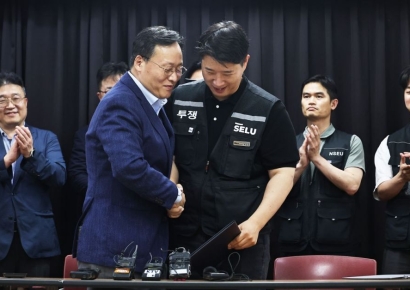 Up to 600 Million Won for Semiconductors, 160 Million Won Bonus for Loss-Making Non-Memory… Samsung Electronics Labor and Management Reach Tentative Deal on Unprecedented Performance Compensation (Comprehensive)
- "Could I Also Receive 370 Billion Won?"... No Limit on 'Stock Manipulation Whistleblower Rewards' Starting the 26th
- "From a 70 Million Won Loss to a 350 Million Won Profit with Samsung and SK hynix"... 'Stock Jackpot' Grandfather Gains Attention
- Opening a Bank Account in Korea Is Too Difficult..."It Costs 150,000 Won Just to Open a Child's Account or Check Card" [Foreigner K-Finance Status]②
- "Who Is Visiting Japan These Days?" The Once-Crowded Tourist Spots Empty Out... What's Happening?
A Fair Trade Commission official stated, "Considering that the rate of experiencing unfair practices is generally high in online shopping malls and the awareness of new systems is low, we plan to strengthen publicity and conduct education regarding the 'Guidelines for Reviewing Unfair Trading Practices by Online Shopping Mall Operators'."
© The Asia Business Daily(www.asiae.co.kr). All rights reserved.
!["Please Help": How Much Do Those Bowing 90 Degrees Really Earn? [Data Pick]](https://cwcontent.asiae.co.kr/asiaresize/307/2026052010120870131_1779239528.png)






