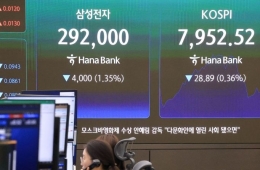
KOSPI Bubble?.. It's Too Early to Worry
P/E 14~14x, P/B 1.2x
Has not reached bubble level
LTV, DTI significantly lower than other countries
Corporate earnings turnaround point

[Asia Economy Reporter Hwang Junho] This year, the KOSPI has surpassed the 3,000 mark and fluctuated above 3,200, raising concerns about a stock market bubble. However, the dominant analysis in the securities industry is that it is too early to worry about a bubble. Rather than an 'irrational investor sentiment-driven overheating leading to record highs,' the rise is attributed to easing monetary and fiscal policies in response to the COVID-19 pandemic. Given that vaccine distribution is still ongoing and it is too early to discuss a full recovery, there is also a judgment that there is still room for growth.
The Market Is Still Rational
![[Image source=Yonhap News]](http://www.asiae.co.kr/news/img_view.htm?img=2021012510444942822_1611539088.jpg)
On the 25th, KB Securities analyzed Korea's asset price bubble and concluded that it is difficult to define the KOSPI as a bubble since both the price-to-earnings ratio (P/E) and price-to-book ratio (P/B) are not at high levels. P/E and P/B are auxiliary indicators used to judge bubbles, with higher values indicating a higher possibility of a bubble.
Currently, both indicators are at moderate levels. Korea's P/E is around 13 to 14 times, and P/B is about 1.2 times. In 1994, when the Japanese economy collapsed, the P/E soared to 72.7 times. During the U.S. dot-com bubble, it was about 24.5 times. Considering that the current U.S. stock market P/E is about 22.7 times, Korea's figures are not considered high. The P/B ratio is similar; the U.S. is about 3.8 times, Japan about 1.27 times, both higher than Korea.
From the perspective of monetary and fiscal policies, although mortgage loans and credit loans have increased, the loan-to-value (LTV) and debt-to-income (DTI) ratios are significantly lower than those of other countries. As asset prices rise, the economy itself is showing signs of recovery. Exports, which account for 40% of Korea's GDP, showed growth in only 2 of the 15 major export items in April last year compared to the previous year, but by December, this expanded to 11 items. If asset prices rise due to liquidity effects, the risk of a bubble can increase.
Heungkuk Investment & Securities compared the current bullish market with those in 2000 and 2007 and suggested that it is still too early to consider the current stock market rise as a bubble. Compared to the past, the current market's growth rate is not large, the shape of the rise is different, and the conditions of companies are also different. Notably, during past bubbles, companies either recorded net losses (in 2000) or were in a period of earnings growth (in 2007), whereas now, companies are turning around from significantly reduced earnings due to COVID-19, making it difficult to define the situation as a bubble.
Direction of Monetary Policy?

On the 21st, as the KOSPI index surpassed 3,000, sparking a stock investment craze, citizens visiting Kyobo Bookstore in Jongno-gu, Seoul, are seen browsing books related to stock investment and financial management. Photo by Kang Jin-hyung aymsdream@
View original imageDaishin Securities expects that although nominal price indicators have risen enough to suggest an imminent market correction, it is still difficult to discuss a full recovery, and thus the liquidity-driven market led by monetary and fiscal policies will continue this year. Meanwhile, since the U.S. Joe Biden administration came into power during the COVID-19 crisis, it is expected to implement even bolder fiscal policies. Accordingly, the stock market is expected to rise until the second quarter of this year and then follow a top-heavy path with reduced upward momentum in the second half.
Hot Picks Today
 If They Fail Next Year, Bonus Drops to 97 Million Won... A Closer Look at Samsung Electronics DS Division’s 600M vs 460M vs 160M Performance Bonuses
- Opening a Bank Account in Korea Is Too Difficult..."Over 150,000 Won in Notarization Fees Just for a Child's Account and Debit Card" [Foreigner K-Finance Status]②
- "While Others Rest"...3 Million May Have to Work on the Alternative Public Holiday
- Room Prices Soar from 60,000 to 760,000 Won and Sudden Cancellations: "We Won't Even Buy Water in Busan" — BTS Fans Outraged
- "Who Is Visiting Japan These Days?" The Once-Crowded Tourist Spots Empty Out... What's Happening?
KB Securities stated, "Korean asset prices have greater growth potential, but the rapid increase in debt remains a risk factor that must be continuously monitored," and added, "Attention should be paid to economic or inflation movements that could affect the pace of interest rate hikes."
© The Asia Business Daily(www.asiae.co.kr). All rights reserved.
!["Please Help Us": How Much Do Those Bowing 90 Degrees These Days Actually Earn? [Data Pick]](https://cwcontent.asiae.co.kr/asiaresize/307/2026052010120870131_1779239528.png)