‘UK-France’ Join Hands for Mine Detection

[Researcher Cheon Gi-hyun, Underwater Maritime Research Team 1, Defense Technology Quality Institute] The United Kingdom and France formed a partnership last November to jointly develop an autonomous mine detection system for detecting naval mines.
The UK Secretary of Defense announced an investment plan of ?184 million (USD 245.3 million) for the joint Maritime Mine Countermeasures (MMCM) project at the France-UK Defense Industry Cooperation Committee conference held online. This plan aims to safely remove naval mines and protect vessels and personnel from danger.
The Royal Navy regularly receives requests to detect mines and other explosives remaining in its surrounding waters since World War II. Recently, the UK has participated in mine detection operations worldwide, including in the Gulf region and off the coast of Libya.
Since successfully completing the demonstration phase test in October 2020, the UK and France plan to produce three sets of equipment under a new contract: autonomous vessels (vessels controlled and operated from a mothership or mother base) necessary for mine detection, towed sonar systems (sonar towed behind vessels to locate explosives), and mine neutralization systems (remotely operated underwater devices used to neutralize detected mines and prevent explosions).
This next-generation mine detection capability is designed to potentially replace conventional manned mine countermeasure vessels such as the Hunt and Sandown-class ships equipped with autonomous systems in the Royal Navy. The first equipment set is scheduled for delivery at the end of 2022, and operational evaluation activities will begin before it enters service within the Royal Navy.
Hot Picks Today
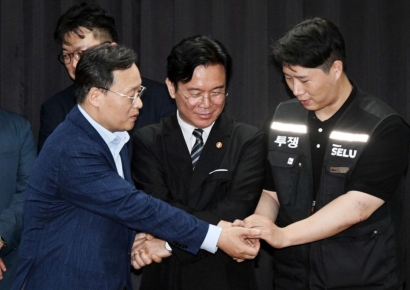 Dramatic Agreement Reached on Eve of Samsung Electronics General Strike... Minister Kim Young-hoon: "Showcased Korea's Strength in Dialogue" (Update)
- "It Has Now Crossed Borders": No Vaccine or Treatment as Bundibugyo Ebola Variant Spreads [Reading Science]
- "From a 70 Million Won Loss to a 350 Million Won Profit with Samsung and SK hynix"... 'Stock Jackpot' Grandfather Gains Attention
- "Stocks Are Not Taxed, but Annual Crypto Gains Over 2.5 Million Won to Be Taxed Next Year... Investors Push Back"
- "Who Is Visiting Japan These Days?" The Once-Crowded Tourist Spots Empty Out... What's Happening?
© The Asia Business Daily(www.asiae.co.kr). All rights reserved.