Slow but Steady Easing of 'Korea-Origin Entry Restrictions'... Lifted for Netherlands and 8 Other Countries
Entry Ban Countries Reduced from Over 150 to 126
Over 10,000 Business Entrants from 16 Countries... Expected to Continue Increasing
Deaths of Korean Businesspeople Related to COVID-19 Continue... Government Plans COVID-19 Response Measures for Local Businesspeople

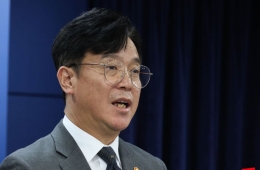
The arrival hall at Terminal 2 of Incheon International Airport was quiet on the 8th. On the same day, Prime Minister Chung Sye-kyun announced at the Central Disaster and Safety Countermeasures Headquarters (CDSCHQ) meeting held at the Government Sejong Complex regarding the response to the novel coronavirus infection (COVID-19), "We will temporarily suspend visa exemptions and visa-free entry for countries that have banned the entry of our citizens, and expand restrictions on the entry of foreigners for non-essential purposes." / Photo by Moon Ho-nam munonam@
View original image[Asia Economy Reporter Lim Cheol-young] Countries that had blocked entry from South Korea due to concerns over the COVID-19 pandemic are gradually lowering their entry barriers one by one. Although COVID-19 is spreading worldwide, it is interpreted that countries where quarantine and inspection are effectively carried out are easing movement restrictions for essential personnel such as businesspeople to reduce the social and economic impact caused by prolonged lockdown measures.
According to the Ministry of Foreign Affairs on the 4th, a total of 178 countries currently impose entry restrictions on travelers from South Korea. Among them, 126 countries maintain entry bans, 9 countries enforce quarantine measures, and 43 countries have strengthened inspections or issued recommendations.
The number of countries imposing entry restrictions on travelers from South Korea once approached around 190, but since peaking in May, it has slowly begun to decline. In particular, the number of countries enforcing the strictest entry bans reached about 150 but has now decreased to 126. This is the result of countries that had imposed entry bans easing their measures to strengthened inspections or recommendations.
Notably, some countries have lifted entry restrictions. Nine countries have lifted entry restrictions, with Montenegro in Europe being the first to do so on May 30, followed by Belarus, North Macedonia, and the Netherlands. In Africa, Tanzania opened its borders on May 20. Subsequently, the EU Council included South Korea in a list of 14 countries for which member states should begin lifting entry restrictions at external borders, according to its recommendations.
Recently, New Zealand has been confirmed to be considering reopening its borders to countries that have successfully managed COVID-19. Mark Sinclair, New Zealand’s Deputy Secretary for Asia and the Americas at the Ministry of Foreign Affairs, explained the need to allow businesspeople entry between the two countries during a video conference with Deputy Foreign Minister Kim Geon on the 2nd. Deputy Secretary Sinclair stated, “The New Zealand government is considering a phased reopening of borders starting with neighboring Australia, followed by countries like South Korea that have successfully controlled COVID-19.”
As entry barriers for travelers from South Korea are lowered, exceptions for businesspeople’s entry are also increasing. According to the Ministry of Foreign Affairs, the number of South Korean businesspeople entering has exceeded 10,000 across 16 countries. South Korea and China have established a fast-track system for businesspeople, allowing their regular entry, and Hungary has fully permitted entry for South Korean businesspeople.
Through government-to-government consultations, a large number of executives and employees from large, small, and medium-sized enterprises have entered Southeast Asian countries such as Vietnam, and cases of entry into South Asian countries like India and Sri Lanka, where COVID-19 situations are severe, have also been reported. Despite the spread of COVID-19, essential personnel are being allowed entry one after another. According to the Ministry of Foreign Affairs, on the 2nd (local time), 33 businesspeople from 14 small and medium-sized enterprises arrived in Bengaluru, southern India, on a special Asiana Airlines flight.
On the same day, six South Korean businesspeople entered Sri Lanka through SriLankan Airlines at Colombo International Airport. On the 9th, 80 businesspeople from 31 companies, including Doosan Heavy Industries, will arrive in New Delhi, India. This achievement was made possible through contacts between the local embassy, KOTRA, the Indian government, and Asiana Airlines.
The easing of entry restrictions on travelers from South Korea and the increasing exceptions for businesspeople’s entry are expected to continue steadily. The government, led by the Ministry of Foreign Affairs, is requesting countries to ease entry restrictions and is continuing consultations to institutionalize exceptions for businesspeople in major trading countries. A Ministry of Foreign Affairs official explained, “Although there are differences depending on the situation of each country, we are continuously negotiating through local diplomatic missions to institutionalize businesspeople’s entry.”
However, there are calls for separate countermeasures as Korean nationals have been dying from COVID-19 in regions such as Iraq, where many Korean companies have entered. On the 27th of last month, a man in his 60s suspected of having COVID-19 died at a construction site for the new city of Bismaya on the outskirts of Baghdad, Iraq. On the 16th, a Korean construction company employee who tested positive for COVID-19 also died. As entry barriers from South Korea are eased and exceptions for businesspeople increase, similar cases are likely to continue.
A Ministry of Foreign Affairs official said, “We are exploring all possible support measures, including establishing a constant communication system between local embassies and companies, supporting close communication with clients, providing quarantine supplies, and emergency telemedicine consultations.” He added, “We will continue to seek effective response measures in organic cooperation with related ministries, quarantine authorities, and companies.”
Hot Picks Today
 "Stocks Are Not Taxed, but Annual Crypto Gains Over 2.5 Million Won to Be Taxed Next Year... Investors Push Back"
- "Don't Throw Away Coffee Grounds" Transformed into 'High-Grade Fuel' in Just 90 Seconds [Reading Science]
- [Lee Jaemyung Administration One Year] "A Breakwater in Crisis, a Blade Against Waste"... Planning Ministry's Fiscal Tightening Earns High Marks
- "Groups of 5 or More Now Restricted"... Unrelenting Running Craze Leaves Citizens and Police Exhausted
- "Even With a 90 Million Won Salary and Bonuses, It Doesn’t Feel Like Much"... A Latecomer Rookie Who Beat 70 to 1 Odds [Scientists Are Disappearing] ③
![[Image source=Yonhap News]](http://www.asiae.co.kr/news/img_view.htm?img=2020061509223894381_1592180559.jpg)
© The Asia Business Daily(www.asiae.co.kr). All rights reserved.