Priority Allocation Within Total Factory Volume for Returning Companies... 'GVC Innovation Strategy' to Be Established by July

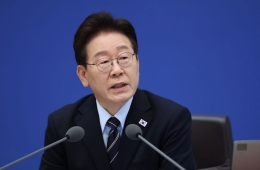
Bang Gi-seon, Deputy Minister for Planning and Coordination at the Ministry of Economy and Finance (center), is giving a detailed pre-briefing on the economic policy direction for the second half of 2020 at the Government Complex Sejong on the 29th of last month.
View original image[Asia Economy Reporter Kwangho Lee] The government is expanding tax, location, and subsidy support for domestic companies returning from overseas expansion. Priority will be given to allocation within the metropolitan area under metropolitan regulations, subsidies for location, facility investment, and relocation costs will be increased, and the requirement to reduce production at overseas business sites to receive corporate and income tax reductions has been eliminated.
On the 1st, the government held a joint briefing with related ministries and announced the '2019 Second Half Economic Policy Direction' containing these details.
First, for domestic returning companies, land will be preferentially allocated within the metropolitan factory total volume system, and location difficulties will be resolved through close inter-ministerial support.
Also, returning companies moving into industrial complexes will be given priority in sales rights, and customized sites will be supplied in rental-only industrial complexes or Saemangeum, among others.
Location regulations will also be eased, such as simplifying the procedure for changing business types within industrial complexes when returning companies move in.
Subsidies to support location, facility investment, and relocation costs for returning companies will be significantly expanded.
Subsidies, which were previously provided up to 10 billion KRW per company only in non-metropolitan areas, will be expanded to 20 billion KRW per business site in non-metropolitan areas, and newly established at 15 billion KRW in the metropolitan area limited to advanced industries or research and development (R&D) centers.
To strengthen support for smart factory and robot dissemination projects, returning companies will be given priority selection as targets for smart factory support projects, and the support limit for robot dissemination projects will be increased from 300 million KRW to 500 million KRW.
Tax benefits for returning companies will also be increased. Previously, corporate and income tax reductions were granted only to returning companies that reduced overseas business site production by more than 50%, but going forward, the requirement to reduce overseas production will be abolished, and tax reduction benefits will be provided proportionally to the amount of production reduction.
Related criteria will be relaxed so that returning companies can come back with R&D centers, and additional points will be given in government R&D projects.
Hot Picks Today
 "Stocks Are Not Taxed, but Annual Crypto Gains Over 2.5 Million Won to Be Taxed Next Year... Investors Push Back"
- "Don't Throw Away Coffee Grounds" Transformed into 'High-Grade Fuel' in Just 90 Seconds [Reading Science]
- Signed Without Viewing for 1.6 Billion Won... Jamsil and Seongbuk Jeonse Prices Jump 200 Million Won in a Month [Real Estate AtoZ]
- "Groups of 5 or More Now Restricted"... Unrelenting Running Craze Leaves Citizens and Police Exhausted
- "Even With a 90 Million Won Salary and Bonuses, It Doesn’t Feel Like Much"... A Latecomer Rookie Who Beat 70 to 1 Odds [Scientists Are Disappearing] ③
The Ministry of Strategy and Finance, Ministry of Trade, Industry and Energy, Ministry of Land, Infrastructure and Transport, and the Office for Government Policy Coordination will form an 'Inter-Ministerial Return Attraction Team' to identify return demand and discover attraction targets. The government plans to prepare a global value chain (GVC) innovation strategy including return and advanced industry attraction strategies by July.
© The Asia Business Daily(www.asiae.co.kr). All rights reserved.