[Beginner's Guide to Real Estate] Purchase Funds of 18 Million KRW · Monthly Rent up to 7.5 Million KRW... Let's Do Year-End Tax Settlement for Real Estate Too
![[Beginner's Guide to Real Estate] Purchase Funds of 18 Million KRW · Monthly Rent up to 7.5 Million KRW... Let's Do Year-End Tax Settlement for Real Estate Too](http://www.asiae.co.kr/news/img_view.htm?img=2019080215004078850_1564725639.jpg)
[Asia Economy Reporter Lee Chun-hee] When you become a real estate reporter, you often get unexpected KakaoTalk messages from friends. "How do I apply for a housing subscription?" "What is first priority?" For the 2030 'Burin-i (Real Estate + Beginner)' who only have subscription savings accounts created by their parents when they were young, I am going to create a guide.
The year-end tax settlement for 18 million workers will begin on the 15th. Many Burin-i, who are young workers, often get tired of the complicated year-end tax settlement and tend to handle it roughly. Today, I will cover the real estate-related year-end tax settlement items for these Burin-i.
There are roughly four major real estate-related year-end tax settlement items: ▲ Monthly rent tax credit ▲ Long-term housing mortgage loan interest repayment income deduction ▲ Housing subscription savings income deduction ▲ Housing lease loan principal and interest repayment income deduction.
First, the monthly rent tax credit, which offers the most benefits, is a system that allows a deduction of 12% of the annual monthly rent paid, up to a maximum of 7.5 million KRW, from the comprehensive income tax for non-homeowners. If the earned income is 55 million KRW or less or business income is 40 million KRW or less, a 12% deduction is possible (up to 900,000 KRW), and if earned income is 70 million KRW or less or business income is 60 million KRW or less, a 10% deduction is possible (up to 750,000 KRW).
There is also a restriction that you must live in a house or officetel or goshiwon with an exclusive area of 85㎡ or less, called the so-called 'National Housing Size.' However, starting this year, even if you live in a house larger than the National Housing Size, you can receive the deduction if the standard market price is 300 million KRW or less.
To claim the monthly rent tax credit, you need a resident registration certificate, a copy of the lease contract, and proof of monthly rent payment (such as a bank transfer confirmation). The address on the resident registration certificate must match the address on the lease contract to receive the deduction. Also, if you have the lease contract and payment proof, you can claim the deduction without the landlord's consent. Usually, you can receive the deduction even without a fixed date stamp obtained when signing the lease contract.

▲ Monthly Rent Tax Credit Guide (Provided by the Ministry of Land, Infrastructure and Transport)
View original imageIn addition, three other income deductions are possible. First, if you are a non-homeowner head of household with a total salary of 70 million KRW or less and have subscribed to housing subscription savings such as housing subscription savings or comprehensive housing subscription savings, you can receive an income deduction of up to 40% of the 2.4 million KRW maximum contribution in 2019, which is up to 960,000 KRW.
However, if the subscription is under a spouse or someone other than the head of household, or if the account was terminated early or canceled, you cannot receive the benefit. Also, you must not have owned a house at any time during the previous year to qualify. The entire household head must have been non-homeowners during this period to receive the deduction.
The other two income deductions relate to loan repayment amounts. If you are a non-homeowner head of household who borrowed a jeonse deposit or monthly rent deposit and are repaying it, you can receive an income deduction for the principal and interest repayment of the housing lease loan. Keep in mind that the deduction is only available if you rent a house below the National Housing Size mentioned earlier. In rural areas such as eup or myeon, houses up to 100㎡ are eligible for the deduction.
The deduction applies not only to loans from financial institutions but also to money borrowed from individuals. Also, if you are a household member who is not the head of household and the head of household has not claimed the related income deduction, you can claim the deduction for loans under your name. The deduction rate is 40% of the principal and interest repayment amount. The maximum deduction limit is 3 million KRW, but note that this limit is combined with the housing subscription savings income deduction limit.
Finally, if you have taken out a loan to purchase a house, you can also receive an income deduction. If a non-homeowner or a one-homeowner employee borrows a long-term loan of 10 years or more or 15 years or more from a financial institution within three months from the date of ownership transfer registration of the house, the interest repayment amount is deductible from income.
You can receive the benefit even if you do not actually reside in the house, and the deduction is also available for loans by household members who are not the head of household. However, the homeowner and the debtor must be the same person. Also, if you are a household member, the deduction is only available for the house you actually reside in, and the head of household must not have claimed the related deduction.
The specific applicable targets vary slightly depending on the loan period. Loans taken before 2013 must be for National Housing Size houses with a standard market price of 300 million KRW or less at the time of acquisition. Loans taken between 2014 and 2018 are eligible for houses with no size restriction but with a standard market price of 400 million KRW or less. Loans taken after 2019 are eligible only for houses with a standard market price of 500 million KRW or less.
The deduction limit also varies depending on the period and loan method. For loans taken after 2015, long-term repayments of 15 years or more with fixed interest rates and non-grace installment repayments can receive an income deduction of up to 18 million KRW. However, for loans taken in the same period with a repayment period of 10 years or more but less than 15 years, the deduction is limited to 3 million KRW per year. Also, note that principal repayments are not deductible.
Hot Picks Today
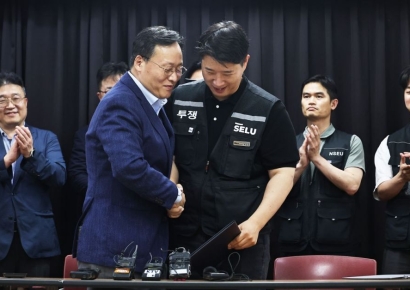 Up to 600 Million Won for Semiconductors, 160 Million Won Bonus for Loss-Making Non-Memory… Samsung Electronics Labor and Management Reach Tentative Deal on Unprecedented Performance Compensation (Comprehensive)
- "Could I Also Receive 370 Billion Won?"... No Limit on 'Stock Manipulation Whistleblower Rewards' Starting the 26th
- "From a 70 Million Won Loss to a 350 Million Won Profit with Samsung and SK hynix"... 'Stock Jackpot' Grandfather Gains Attention
- Opening a Bank Account in Korea Is Too Difficult..."It Costs 150,000 Won Just to Open a Child's Account or Check Card" [Foreigner K-Finance Status]②
- "Who Is Visiting Japan These Days?" The Once-Crowded Tourist Spots Empty Out... What's Happening?
© The Asia Business Daily(www.asiae.co.kr). All rights reserved.
!["Please Help": How Much Do Those Bowing 90 Degrees Really Earn? [Data Pick]](https://cwcontent.asiae.co.kr/asiaresize/307/2026052010120870131_1779239528.png)